
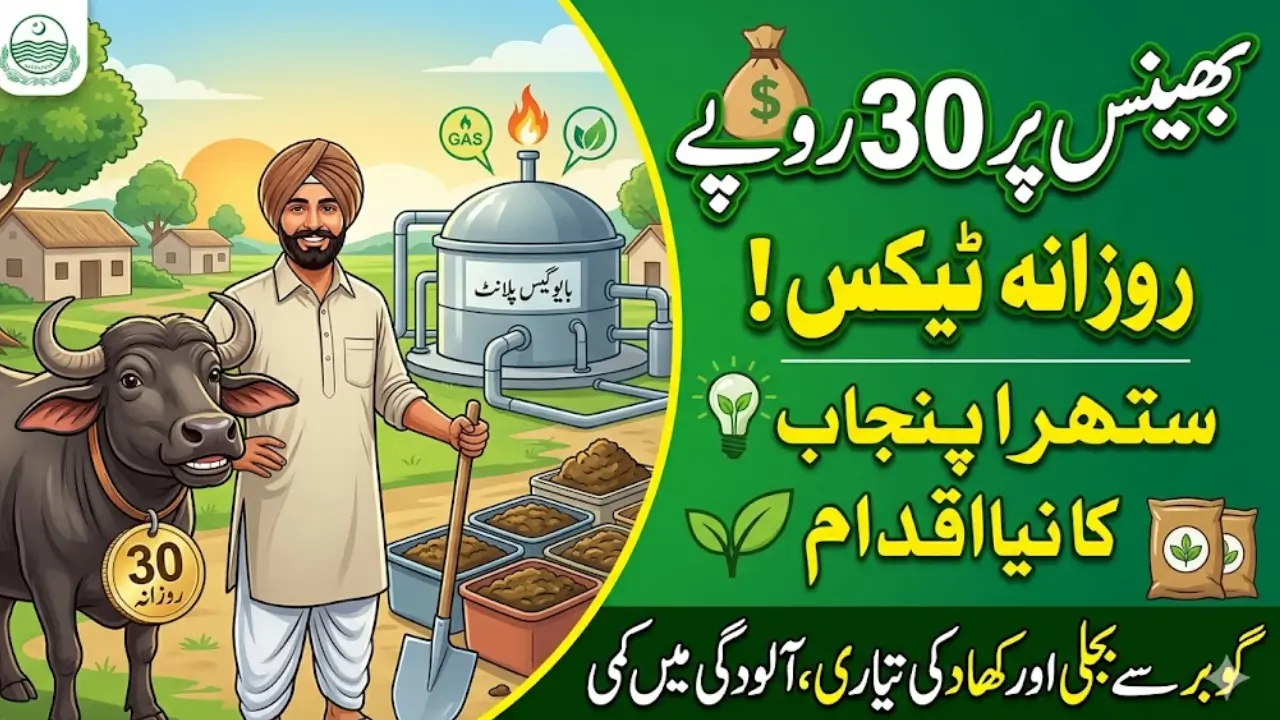
The Punjab government has introduced a new initiative under the “Sathra Punjab Program” aimed at improving rural sanitation and promoting eco-friendly energy. As part of this policy, a daily tax of Rs 30 per buffalo will be collected from livestock owners. This step is designed to address two major challenges at once: unmanaged animal waste and the lack of sustainable energy sources in rural areas.
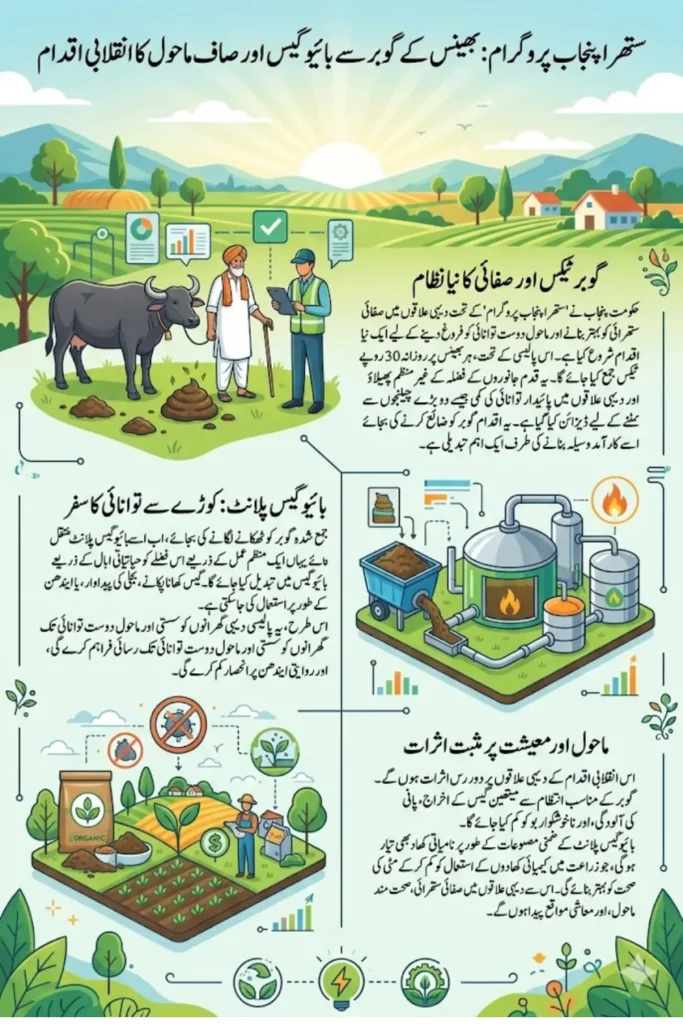
This policy reflects a shift toward resource utilization rather than waste disposal. Buffalo dung, which was previously discarded or underused, will now be collected and processed for biogas production. By turning waste into energy, the government hopes to reduce pollution levels and create economic opportunities in villages across Punjab.
Key Features of the Buffalo Dung Tax System
The dung tax system has been structured to ensure smooth implementation and long-term sustainability. It is directly linked with environmental goals and rural development plans.
- A fixed Rs 30 daily tax per buffalo will be charged
- The program applies mainly to rural livestock owners
- Collected dung will be used for biogas and organic fertilizer production
- The initiative is part of a broader cleanliness and sanitation campaign
- Local authorities will manage collection and monitoring systems
This approach not only ensures proper waste management but also encourages farmers to become part of a structured environmental solution. The collected dung will be systematically transported to processing units where it will be converted into useful products.
You can also read: Problem in funding Government Affordable
Objectives of the Sathra Punjab Program
The main goal of this initiative is to create cleaner and healthier rural environments while promoting renewable energy sources. The government aims to reduce the harmful effects of open dung disposal, which often leads to pollution and health risks.
Another important objective is to introduce biogas as an alternative energy source. Many rural households rely on traditional fuels, which are both expensive and harmful to the environment. By using dung to generate energy, the program supports both cost savings and environmental protection.
- Improve rural sanitation systems
- Reduce environmental pollution
- Promote renewable energy production
- Support local economic development
- Encourage organized waste management practices
This initiative aligns with global sustainability goals and demonstrates how local resources can be effectively utilized.
How the Dung Collection and Processing System Works
The success of this program depends on an efficient collection and processing system. Local authorities will play a key role in ensuring that dung is collected regularly and transported to designated facilities.
Farmers will be required to pay the daily tax, after which collection teams will gather dung from specific locations. This collected material will then be sent to biogas plants, where it undergoes a controlled process to produce energy.
| Process Stage | Description |
|---|---|
| Collection | Dung gathered from farms on a daily basis |
| Transportation | منتقل to processing or biogas plants |
| Processing | Conversion into biogas through fermentation |
| Energy Production | Biogas used for cooking, electricity, or fuel |
| By-products | Organic fertilizer produced for agriculture |
This structured system ensures minimal waste and maximum output, making the initiative both practical and efficient.
Economic Impact on Farmers and Rural Communities
While the tax may initially seem like an added burden, the long-term benefits could outweigh the costs. Farmers will indirectly benefit from improved sanitation, reduced health risks, and access to affordable energy.
Additionally, the production of organic fertilizer from dung can support agricultural activities. This reduces the need for chemical fertilizers, lowering farming costs and improving soil health over time.
- Potential job creation in collection and processing sectors
- Access to low-cost biogas energy
- Improved agricultural productivity through organic fertilizer
- Better living conditions in rural areas
The initiative also opens doors for small-scale industries based on renewable energy and waste management.
Environmental Benefits of the Initiative
One of the strongest aspects of this policy is its environmental impact. Improper disposal of dung often leads to methane emissions, water contamination, and unpleasant living conditions. By managing dung effectively, these issues can be significantly reduced.
Biogas production helps capture methane and convert it into usable energy, which is far less harmful than releasing it into the atmosphere. This contributes to efforts against climate change and promotes cleaner energy solutions.
- Reduction in greenhouse gas emissions
- Decrease in water and soil pollution
- Promotion of clean and renewable energy
- Support for sustainable rural development
These benefits make the program an important step toward environmental responsibility.
Challenges and Public Response
Like any new policy, the buffalo dung tax may face some resistance, especially from farmers concerned about additional expenses. There may also be challenges in implementing a consistent collection system across remote areas.
However, awareness campaigns and proper communication can help people understand the long-term advantages. If managed effectively, the initiative can gain public support and become a model for other regions.
- Concerns about financial burden on farmers
- Need for efficient management systems
- Importance of public awareness and education
- Requirement for transparent implementation
Addressing these challenges will be crucial for the program’s success.
You can also read: Breaking News: Petrol and Diesel Prices
Conclusion
The buffalo dung tax introduced under the Sathra Punjab Program is a unique and forward-thinking initiative. By turning animal waste into a valuable resource, the government aims to improve sanitation, promote renewable energy, and strengthen the rural economy.
Although the policy may require adjustments and public cooperation, its long-term benefits in terms of environmental protection and economic growth are significant. If implemented properly, it could transform how rural communities manage waste and energy, setting a strong example for sustainable development.